




Mobile eSIM: Complete Guide for Travelers in 2026
International travel has changed dramatically over the past few years, and staying connected while abroad no longer requires hunting for local SIM cards at airport kiosks or paying expensive roaming fees. The mobile esim represents a fundamental shift in how travelers access cellular networks, offering instant activation and flexible data plans without physical cards. This technology has become essential for modern travelers who need reliable connectivity for navigation, communication, and staying productive across borders.
What Is a Mobile eSIM and How Does It Work
A mobile esim is an embedded SIM card built directly into your smartphone, tablet, or smartwatch. Unlike traditional plastic SIM cards that you insert into a device, an eSIM is a programmable chip that stores multiple carrier profiles digitally. This technology allows you to download and activate cellular plans without handling physical cards or visiting carrier stores.
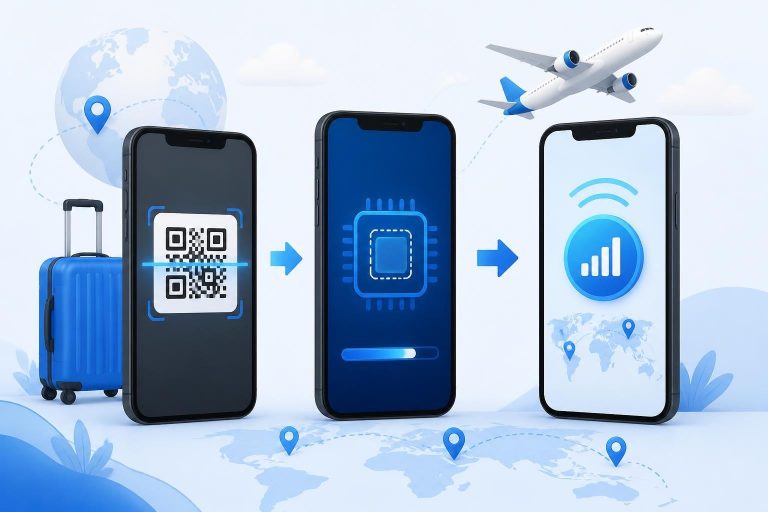
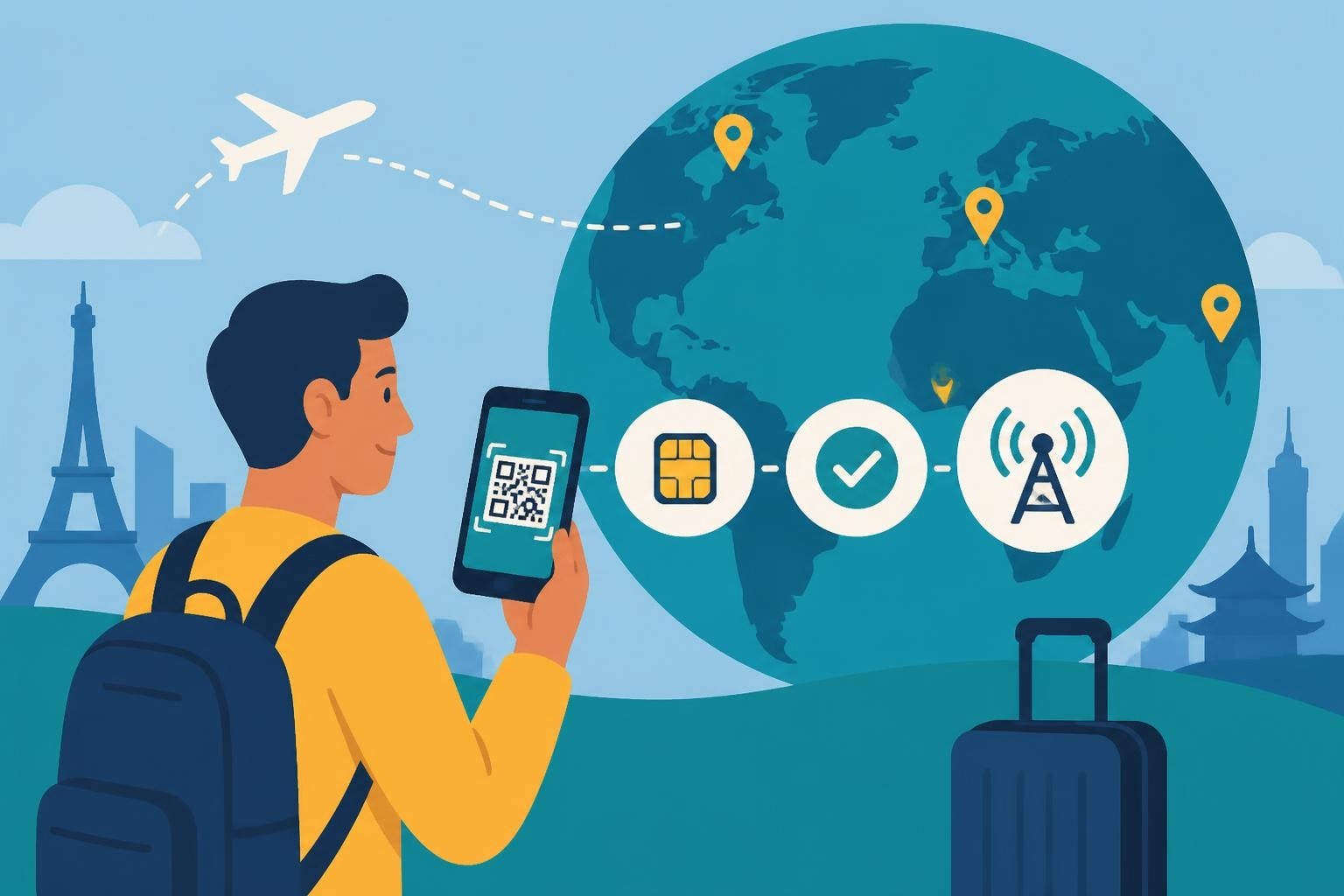
The technical foundation relies on embedded Universal Integrated Circuit Card (eUICC) technology, which enables Remote SIM Provisioning procedures that carriers use to configure your device remotely. When you purchase a mobile esim plan, you receive a QR code containing your profile information. Scanning this code downloads the carrier configuration to your device, activating your service within minutes.
The Activation Process Explained
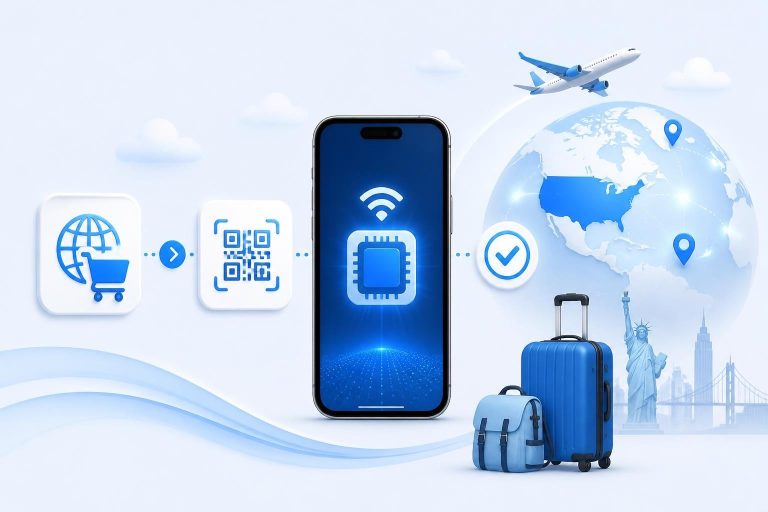
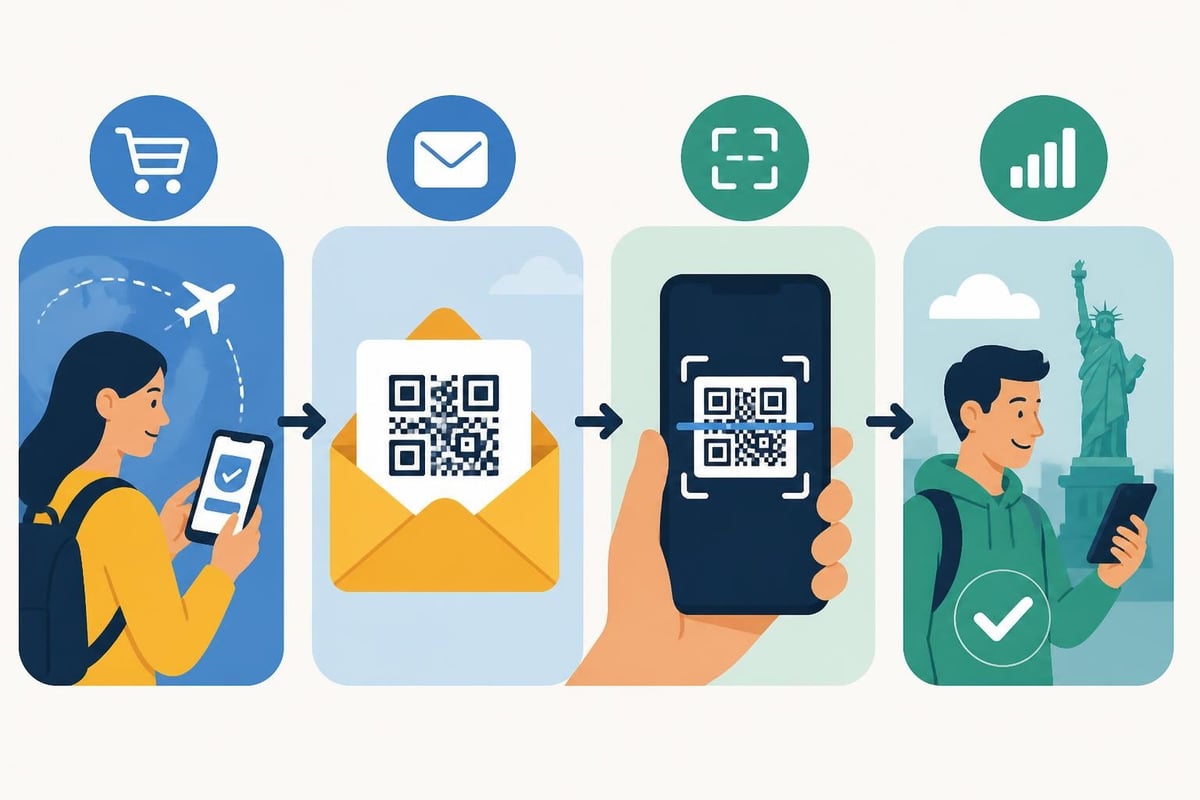
Getting started with a mobile esim requires just a few straightforward steps:
- Purchase your eSIM plan from a provider before or during your trip
- Receive your QR code via email or through a provider's app
- Scan the QR code using your device's camera or settings menu
- Download the profile which takes 30-60 seconds with internet access
- Activate the plan when you arrive at your destination or immediately if needed
Most travelers complete the entire setup in under five minutes. Your device manages everything digitally, eliminating the frustration of tiny SIM cards and ejector tools.
Why Travelers Choose Mobile eSIM Over Traditional Options
The shift toward mobile esim technology addresses several pain points that international travelers have experienced for decades. Traditional roaming through your home carrier often results in shocking bills, with data charges reaching $10-15 per megabyte in some regions. Physical local SIM cards require finding stores with English-speaking staff, understanding foreign carrier options, and keeping track of multiple small cards.
Mobile eSIM advantages include:
- Instant activation without visiting physical stores or kiosks
- Cost transparency with prepaid plans showing exact costs upfront
- Multiple profiles stored on one device for frequent travelers
- No physical swapping between different SIM cards
- Environmental benefits from eliminating plastic waste
- Flexible plans ranging from daily to monthly coverage
The financial difference proves substantial. A week-long trip to Europe might cost $100-200 in roaming fees through traditional carriers, while a mobile esim plan typically ranges from $10-30 for the same period with comparable or better data allowances.
Real-World Travel Scenarios
Business travelers particularly benefit from maintaining their primary number while adding local data through a mobile esim. Your phone can receive calls and texts on your home number while using affordable local data for emails, video calls, and file transfers. This dual-SIM functionality changes how professionals stay connected during international assignments.
For leisure travelers, the convenience factor matters most. Landing in a foreign country with immediate connectivity means accessing ride-sharing apps, digital maps, translation tools, and hotel information without stress or delay. HalaGo’s prepaid travel eSIM plans offer this instant activation across popular destinations, helping travelers stay connected from the moment they land.
Compatible Devices and System Requirements
Not every smartphone supports mobile esim technology, though compatibility has expanded significantly since the first eSIM-capable iPhones launched in 2018. Understanding whether your device works with eSIMs determines whether this solution fits your travel needs.
Device Compatibility Chart
| Device Type | eSIM Support | Notes |
|---|---|---|
| iPhone XS and newer | Full support | Dual SIM capability with one eSIM |
| iPhone 14 (US models) | eSIM only | No physical SIM slot |
| Google Pixel 3 and newer | Full support | Multiple eSIM profiles supported |
| Samsung Galaxy S20+ and newer | Full support | Varies by model and region |
| iPad Pro (2018+) and iPad Air (2019+) | Full support | Cellular models only |
| Apple Watch Series 3+ | Full support | Requires paired iPhone setup |
Apple’s eSIM provisioning documentation provides technical details for developers, but travelers simply need to verify their specific model supports the technology. Most flagship smartphones released after 2020 include mobile esim capability, though budget and mid-range models may still require physical SIM cards.
Checking Your Device Compatibility
Finding out whether your phone supports mobile esim takes just a moment:
For iPhone users: Go to Settings > General > About. If you see an "Available SIM" option or can access Settings > Cellular > Add Cellular Plan, your device supports eSIM technology.
For Android users: Navigate to Settings > Connections > SIM card manager (or Settings > Network & Internet > Mobile network). Look for an option to "Add mobile plan" or "Download a SIM." The exact menu location varies by manufacturer.
Some devices support multiple eSIM profiles simultaneously, letting you store several carrier configurations and switch between them as needed. This proves valuable for frequent travelers visiting the same destinations regularly.
Setting Up Your Mobile eSIM Before Your Trip
Preparation separates smooth travel experiences from stressful ones. Activating your mobile esim before departure ensures you have connectivity the moment your plane lands, avoiding the scramble to find WiFi or navigate unfamiliar carrier stores.
Pre-Departure Checklist
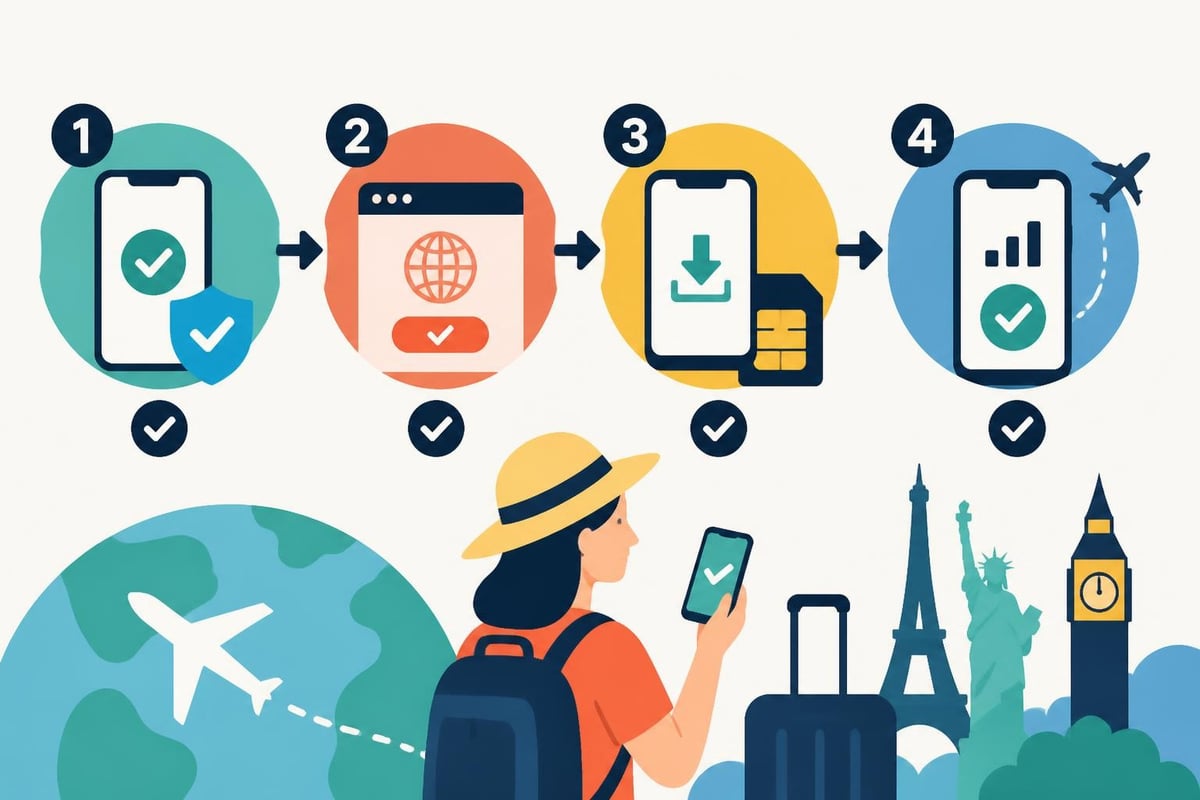
Complete these steps at least 24-48 hours before traveling:
- Verify your device is unlocked and not restricted to a specific carrier
- Update your device to the latest operating system version
- Purchase your eSIM plan for your destination country or region
- Download the eSIM profile using your home WiFi connection
- Test the profile activation (some providers allow this before arrival)
- Take screenshots of your QR code and activation instructions
- Note your provider's customer support contact information
The unlocking requirement deserves emphasis. Carrier-locked devices cannot use mobile esim plans from other providers, even if the hardware supports eSIM technology. Contact your home carrier at least two weeks before travel to request unlocking if you're still under contract or have device financing.
Understanding Data Roaming Settings
Even with a mobile esim installed, incorrect settings can prevent connectivity or cause unexpected charges. Your device manages multiple SIM profiles through specific controls that determine which connection handles data, calls, and messages.
Critical settings to configure:
- Set your eSIM as the primary data line in cellular settings
- Disable data roaming on your home SIM to prevent charges
- Enable data roaming on your eSIM to access local networks
- Select your preferred line for iMessage and FaceTime if using iPhone
- Choose which SIM handles cellular data for apps and browsers
These settings appear confusing initially, but they provide precise control over connectivity. Most travelers keep their home SIM active for receiving important calls and texts while routing all data through the mobile esim to avoid roaming fees.
Types of Mobile eSIM Plans for Different Travel Needs
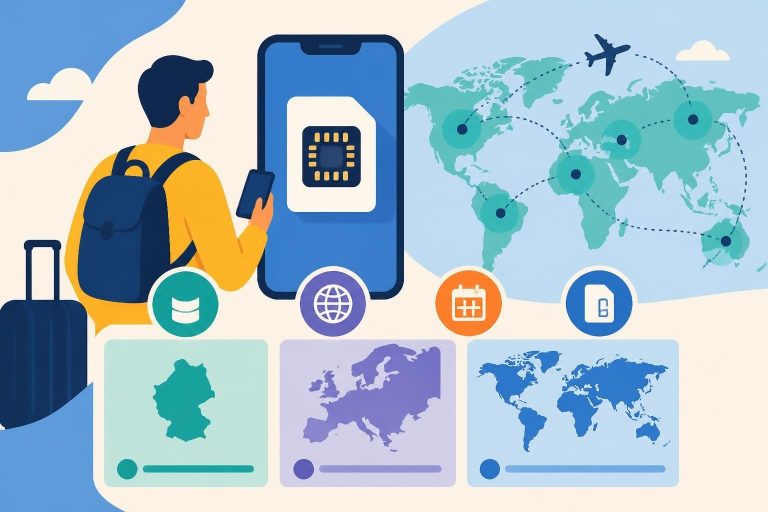
The flexibility of mobile esim technology extends to plan structures, with providers offering various options tailored to different travel patterns and data requirements. Understanding these categories helps you select the most cost-effective solution for your specific trip.
Single-Country vs Regional Coverage
Single-country plans provide the most affordable option for travelers visiting one destination. These plans connect to local carrier networks in that specific country, offering the same speeds and coverage locals experience. Prices typically range from $5-15 for 1-2 GB of data over 7-15 days.
Regional plans cover multiple countries within a geographic area, such as Europe, Southeast Asia, or Latin America. These work well for multi-country trips, automatically connecting to available networks as you cross borders. The convenience costs slightly more, usually $15-30 for similar data allowances across 30+ countries.
| Plan Type | Best For | Typical Cost | Coverage Area |
|---|---|---|---|
| Single-country | One destination, longer stays | $5-15 | One nation |
| Regional | Multi-country tours | $15-30 | 10-50 countries |
| Global | World travelers, cruise passengers | $40-60 | 100+ countries |
| Unlimited | Heavy data users, remote workers | $30-50 | Varies by region |
Data Allowances and Speed Considerations
Mobile esim plans range from small 1 GB options for light users checking emails and maps to unlimited plans for digital nomads streaming content and attending video conferences. Understanding what eSIM technology delivers helps set appropriate expectations for speeds and performance.
Most travel eSIM plans provide 4G LTE speeds, with some premium options including 5G access in supported areas. Speed throttling may occur after consuming your high-speed allocation on "unlimited" plans, typically reducing speeds to 512 kbps or 1 Mbps for continued use.
Light travelers who primarily use WiFi at hotels and restaurants often find 1-3 GB sufficient for a week. Moderate users checking social media, uploading photos, and using navigation apps comfortably operate within 5-10 GB. Heavy users should consider 15+ GB or unlimited options to avoid mid-trip surprises.
Activation Tips and Troubleshooting Common Issues
Even with straightforward activation processes, travelers occasionally encounter challenges when setting up their mobile esim. Most issues stem from simple oversights rather than technical failures, and knowing common solutions saves time and frustration.
Installation and Connectivity Problems
QR code won't scan: Ensure adequate lighting and hold your device steady about 6-8 inches from the screen or printed code. If repeated attempts fail, most providers offer manual installation using SM-DP+ addresses and activation codes entered directly into cellular settings.
Profile downloads but won't activate: Check that airplane mode is disabled, you have an active internet connection, and data roaming is enabled for the eSIM profile. Some devices require a restart after downloading profiles before activation completes successfully.
No network signal after activation: Verify you're in an area with coverage from your eSIM provider's partner networks. Toggle airplane mode on and off, manually select a network in cellular settings, or restart your device. Signal acquisition sometimes takes 2-5 minutes in the initial connection.
Managing Multiple Profiles Efficiently
Frequent travelers accumulate several eSIM profiles over time. Your device stores these digitally, letting you switch between them without re-downloading or re-scanning QR codes. This proves valuable when returning to destinations you visit regularly.
Best practices for profile management:
- Label each eSIM clearly with the country or region name
- Delete expired profiles to avoid confusion and maintain organization
- Keep active profiles for destinations you visit annually
- Document which providers offered the best service in each location
- Store QR codes in a secure cloud folder for reinstallation if needed
Some travelers maintain separate eSIM profiles for business and leisure travel, switching between them based on trip purpose and expense tracking requirements.
Advanced Features and Future Developments
The mobile esim landscape continues evolving, with manufacturers and carriers introducing new capabilities that enhance traveler experiences. Understanding these developments helps you leverage emerging features and anticipate future changes.
Integrated SIM Technology Advances
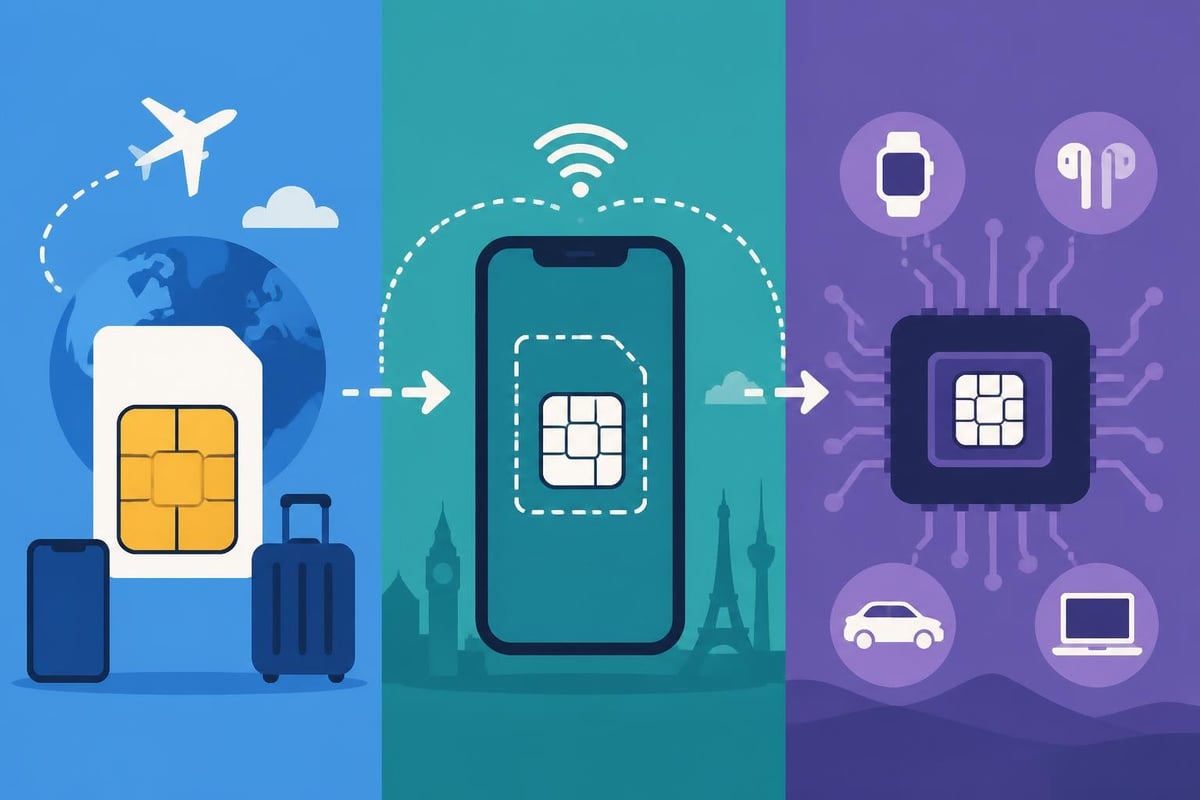
Qualcomm and Thales recently unveiled the world's first GSMA-compliant integrated SIM (iSIM), representing the next evolution beyond eSIM technology. This innovation embeds SIM functionality directly into the device's main processor rather than as a separate chip, reducing power consumption and freeing physical space for other components.
For travelers, these advances promise even faster activation, improved battery life during international use, and eventually lower costs as the technology becomes standard in smartphones. The transition won't happen overnight, but the direction indicates continued improvement in digital connectivity solutions.
Industry Standards and Specifications
Technical resources like eUICC.tech document the GSMA specifications that govern how mobile esim technology operates globally. These standards ensure interoperability between devices and carriers worldwide, preventing the fragmentation that could leave travelers stranded without compatible options.
Understanding that reputable eSIM providers follow these specifications helps travelers identify reliable services. Providers claiming proprietary technologies or non-standard implementations may face compatibility issues or limited carrier partnerships.
Security Considerations for Mobile eSIM Users
Digital SIM technology introduces different security considerations compared to physical cards. While mobile esim provides convenience, travelers should understand potential vulnerabilities and protection measures.
Protecting Your eSIM Profiles
Unlike physical SIM cards that require stealing your device to access, eSIM profiles exist as data that could theoretically be compromised through security breaches. However, the technology includes several protective measures:
- Profile encryption prevents unauthorized access to your carrier credentials
- Device authentication ensures only authorized devices can download specific profiles
- PIN/password protection on cellular settings prevents unauthorized profile changes
- Remote profile management allows disabling compromised profiles instantly
Enable device PIN codes, biometric authentication, and Find My Device features to secure both your hardware and eSIM profiles. Treat QR codes with the same confidentiality as passwords, avoiding sharing them in public forums or unsecured communications.
Safe Practices When Traveling
Recommended security measures:
- Purchase eSIM plans only from established providers with verified credentials
- Use secure connections when downloading profiles, avoiding public WiFi when possible
- Enable two-factor authentication on accounts managing eSIM subscriptions
- Monitor your mobile data usage for unexpected spikes indicating unauthorized access
- Delete eSIM profiles immediately after travel periods end
The convenience of mobile esim shouldn't compromise security. Taking basic precautions protects both your connectivity and personal information while traveling internationally.
Cost Comparison and Budget Planning
Understanding the true cost of staying connected internationally requires comparing all available options with realistic usage estimates. The most affordable solution depends on your specific travel pattern, destination, and data needs.
Breaking Down Travel Connectivity Costs
| Option | 7-Day Europe Trip | 7-Day Asia Trip | 14-Day Americas Trip |
|---|---|---|---|
| Home carrier roaming | $100-200 | $150-250 | $120-180 |
| Airport SIM purchase | $30-50 | $25-40 | $35-60 |
| Mobile eSIM (prepaid) | $10-25 | $12-28 | $15-35 |
| WiFi only (no cellular) | $0 | $0 | $0 |
These estimates assume moderate data usage of 5-8 GB over the travel period. Your actual costs vary based on specific carriers, plans, and promotional offers. However, the pattern remains consistent: mobile esim plans typically cost 50-70% less than traditional roaming while offering comparable or superior data allowances.
Hidden Costs to Consider
Traditional roaming packages often include confusing terms that lead to unexpected charges. Pay-per-use fees after exceeding daily caps, premium SMS charges, and voicemail retrieval costs add up quickly. Physical local SIM cards require purchasing the card itself (often $5-15) before adding credit for actual service.
Mobile esim eliminates most hidden costs through prepaid structures with clear terms. You know exactly what you're paying before purchasing, data limits are clearly stated, and there's no risk of bill shock weeks after returning home. This financial transparency proves valuable for both leisure and business travelers managing expenses.
Practical Tips from Experienced eSIM Travelers
Years of collective traveler experience reveal patterns that separate smooth connectivity from frustrating technical problems. These practical insights help you avoid common pitfalls and maximize your mobile esim experience.
Timing Your Purchase and Activation
Purchase timing matters. Buy your eSIM plan 2-7 days before departure when you have time to test activation and resolve any issues without travel stress. Last-minute purchases risk delivery delays, incompatible devices discovered too late, or activation problems when you need connectivity most.
Activation windows vary by provider. Some eSIM plans activate immediately upon scanning the QR code, while others begin when you first connect to a network in your destination. Understanding your plan's activation trigger prevents wasting days of coverage while still at home.
Bandwidth Management Strategies
Conserve your data allocation through smart device settings:
- Disable automatic app updates and background refresh on cellular data
- Download maps, translation tools, and entertainment content over WiFi before trips
- Use lower resolution settings for video calls and streaming services
- Enable data saver modes in browsers and frequently used applications
- Connect to hotel, restaurant, and cafe WiFi when available for heavy downloads
These adjustments extend your data allowance significantly without sacrificing essential connectivity. A 5 GB plan managed carefully often outlasts a 10 GB plan used carelessly.
Regional Differences and Local Regulations
Mobile esim availability and functionality vary across countries due to regulatory environments, carrier partnerships, and infrastructure development. Understanding these regional differences helps set appropriate expectations and plan accordingly.
Countries With Strong eSIM Infrastructure
Europe, North America, and developed Asian markets offer the most robust mobile esim support with extensive carrier partnerships and competitive pricing. Countries like Germany, France, the United Kingdom, Japan, and Singapore have widespread eSIM adoption with reliable networks and fast activation processes.
Travelers to these regions benefit from multiple provider options, competitive pricing, and excellent coverage quality. The terminology and technical definitions remain consistent across these markets, simplifying the selection process for first-time eSIM users.
Emerging Markets and Limitations
Some countries restrict eSIM technology through regulatory requirements or carrier resistance to the model. China, for example, requires complex registration processes that make eSIM access challenging for short-term visitors. Other developing markets simply lack the infrastructure partnerships needed for reliable eSIM service.
Research your specific destination before relying exclusively on mobile esim connectivity. Maintain backup plans such as pocket WiFi devices, international roaming day passes, or plans to purchase local physical SIMs if eSIM options prove limited or unreliable in your destination.
Mobile eSIM technology has fundamentally transformed international travel connectivity, offering instant activation, transparent pricing, and flexible coverage without the hassles of physical SIM cards or expensive roaming fees. Whether you're visiting one country or touring multiple destinations, understanding how to select compatible plans, activate profiles correctly, and manage settings ensures seamless connectivity throughout your journey. HalaGo simplifies this process with instant eSIM activation and flexible prepaid plans tailored for travelers, helping you stay connected from the moment you land until you return home. Purchase your plan online, receive your QR code immediately, and activate your eSIM before departure for stress-free global connectivity wherever your travels take you.