




Mobile Data: Essential Guide for Travelers in 2026
The way we consume and rely on mobile data has fundamentally transformed how people travel, work, and stay connected in 2026. For international travelers, understanding mobile data consumption, security, and cost-effective management has become as essential as booking flights and accommodations. The global landscape of wireless connectivity continues to evolve rapidly, with usage patterns reaching unprecedented levels and new technologies reshaping expectations for seamless connectivity across borders.
Understanding Mobile Data Consumption Trends
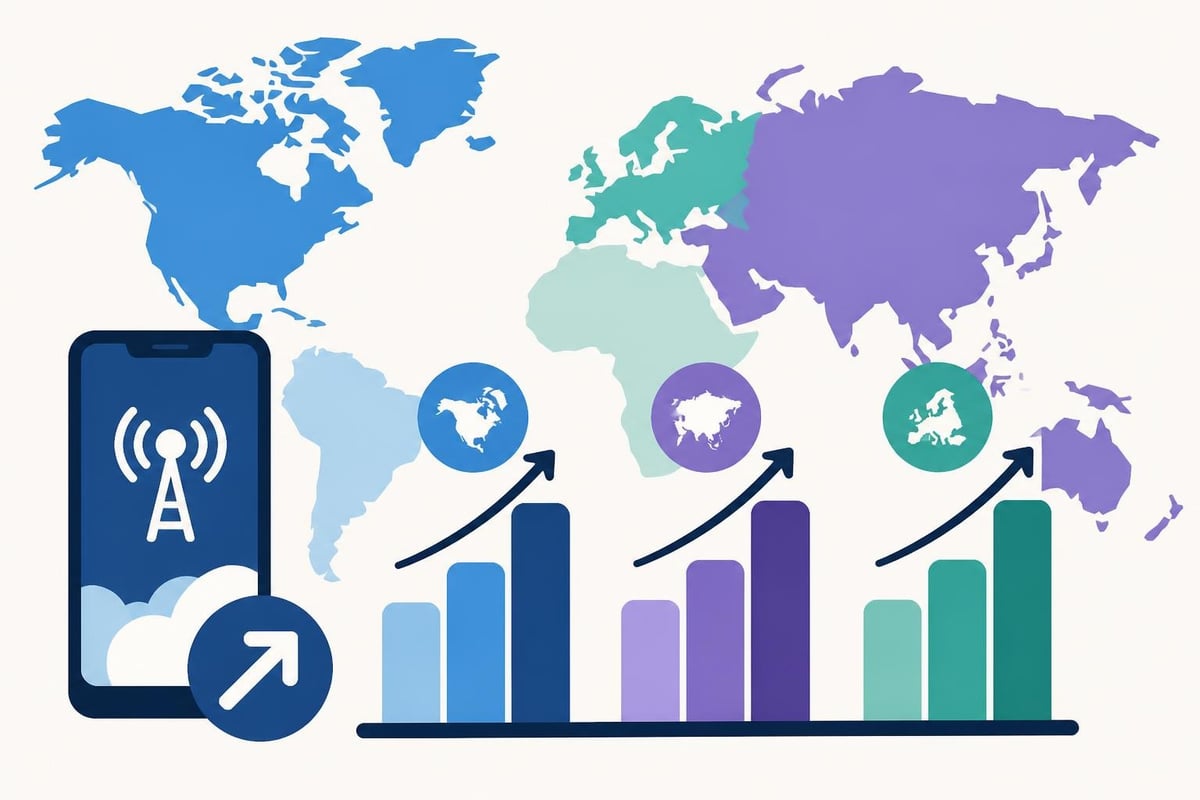
The surge in mobile data usage shows no signs of slowing down. According to recent industry research, Americans used a record 132 trillion megabytes of wireless data in 2024, marking the largest year-over-year increase in United States history. This exponential growth reflects changing behaviors around streaming, social media, cloud services, and real-time navigation.
Global Data Usage Patterns
Different regions demonstrate varying consumption patterns based on infrastructure development and pricing models. India’s average monthly mobile data consumption per user crossed 31 GB in 2025, showcasing how rapidly emerging markets have embraced mobile-first connectivity. The widespread adoption of 5G technology accelerates these trends, enabling users to consume more bandwidth-intensive content without degraded performance.
For travelers, these statistics highlight an important reality: data needs during trips often exceed typical usage at home. Navigation apps, translation services, video calls with family, and sharing travel moments on social media all contribute to heightened consumption patterns.
How Mobile Data Works Across Borders
Understanding the technical foundation of mobile data connectivity helps travelers make informed decisions about their connectivity options. Cellular networks operate through complex systems of towers, spectrum bands, and carrier agreements that determine where and how your device can access data services.
Network Technologies and Standards
Modern smartphones support multiple network generations simultaneously, including:
- 5G networks offering ultra-fast speeds and low latency in major cities
- 4G LTE networks providing reliable coverage in most populated areas
- 3G networks serving as fallback options in remote locations
- 2G networks still operational in some developing regions
The transition from physical SIM cards to embedded SIM (eSIM) technology represents one of the most significant shifts in how travelers access mobile data. This digital approach eliminates the need to purchase and swap physical cards when crossing borders, streamlining the connection process considerably.
| Network Type | Typical Speeds | Best Use Cases | Global Coverage |
|---|---|---|---|
| 5G | 100-1000 Mbps | 4K streaming, video calls, large uploads | Major cities, limited rural |
| 4G LTE | 10-50 Mbps | HD streaming, navigation, social media | Widespread urban and suburban |
| 3G | 1-10 Mbps | Basic browsing, messaging, email | Extensive including rural areas |
| 2G | 50-200 Kbps | Text messaging, basic email | Nearly universal |
Roaming and International Connectivity
Traditional international roaming involves your home carrier partnering with networks in other countries to provide service. This convenience historically came with exorbitant costs, as carriers charged premium rates for data used abroad. Many travelers discovered bill shock upon returning home from trips, with charges reaching hundreds or thousands of dollars for modest data usage.
Modern solutions address these pain points through alternative approaches. eSIM technology enables travelers to activate local or regional data plans digitally, bypassing traditional roaming entirely. For instance, Mexico eSIM plans allow visitors to purchase and activate connectivity before their trip, providing predictable costs and local network access without physical SIM card exchanges.
Managing Mobile Data Usage Effectively
Strategic management of mobile data consumption prevents unexpected charges and ensures connectivity remains available when needed most. Travelers often underestimate their usage patterns when abroad, particularly when relying on data-intensive services like mapping and ride-sharing applications.
Monitoring Your Consumption
Both iOS and Android devices include built-in tools for tracking data usage. These features show which applications consume the most bandwidth, enabling informed decisions about which services to restrict or use only on Wi-Fi networks.
Key monitoring strategies include:
- Set data usage warnings and limits within your device settings
- Review weekly usage reports to identify consumption patterns
- Disable background app refresh for non-essential applications
- Download offline maps and content before traveling
- Track usage against your plan allocation to avoid overages
Research suggests many users pay for more mobile data than they actually use due to psychological factors and fear of running out. Understanding actual usage patterns through consistent monitoring helps optimize plan selection and reduce unnecessary expenses.
Optimizing Settings for Reduced Consumption
Several device settings significantly impact data usage without substantially affecting user experience:
- Disable auto-play for videos on social media platforms
- Select lower resolution streaming quality when not on Wi-Fi
- Turn off automatic cloud backup and sync features
- Use data-saving modes built into popular browsers
- Restrict background data access for specific applications
Mobile Data Security Considerations
As reliance on mobile data increases, security concerns become paramount. Travelers connecting to unfamiliar networks face unique vulnerabilities that require proactive protection measures. The intersection of convenience and security demands careful attention to best practices.
Threats to Mobile Data Security
Mobile devices face numerous security challenges that can compromise personal information and financial data. Mobile security encompasses protection against data breaches, unwanted surveillance, and ransomware, all of which pose significant risks to travelers accessing banking services, email, and sensitive documents while abroad.
Common security threats include:
- Man-in-the-middle attacks on public Wi-Fi networks
- Malicious applications harvesting personal data
- Phishing attempts through SMS and email
- Unauthorized access to device storage
- SIM swap fraud affecting account security
Securing Your Mobile Data Connection
When comparing connectivity options, security differences become crucial decision factors. Recent analysis of 5G versus public Wi-Fi reveals that cellular data connections generally provide superior security through built-in encryption, while public Wi-Fi networks expose users to significant risks without additional protection layers.
Best practices for mobile data security include:
- Avoid public Wi-Fi for sensitive transactions whenever possible
- Use cellular data for banking and confidential communications
- Enable two-factor authentication on all important accounts
- Keep device operating systems and applications updated
- Install reputable security software on mobile devices
- Verify application permissions before installation
- Use encrypted messaging applications for private conversations
| Security Measure | Protection Level | Ease of Implementation | Impact on Performance |
|---|---|---|---|
| Cellular Data Only | High | Easy | None |
| VPN on Public Wi-Fi | Medium-High | Moderate | Slight speed reduction |
| Encrypted Apps | Medium | Easy | Minimal |
| Security Software | Medium | Moderate | Low battery impact |
| Regular Updates | High | Easy | None |
Choosing the Right Mobile Data Plan
Selecting appropriate data plans requires evaluating travel patterns, typical consumption, and budget constraints. The fragmented landscape of carrier offerings, regional plans, and unlimited options creates complexity for travelers seeking optimal solutions.
Plan Types and Their Applications
Different plan structures serve distinct use cases:
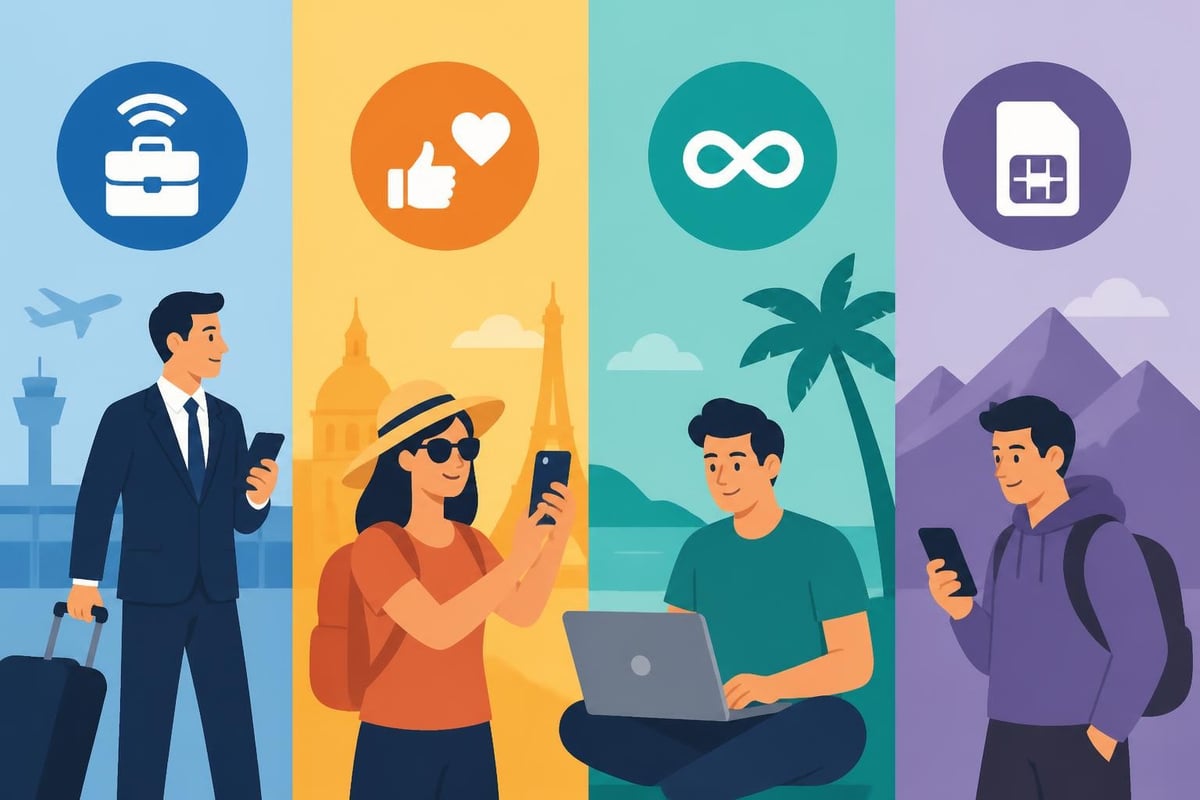
Single-country plans work best for travelers visiting one destination for extended periods, offering the lowest per-gigabyte costs but limited flexibility for multi-country itineraries. These plans typically provide the best value when staying in locations like Japan or Vietnam for business trips or extended vacations.
Regional plans cover multiple countries within a geographic area, perfect for travelers exploring several destinations during a single trip. These offerings balance cost efficiency with coverage breadth, though per-gigabyte rates may exceed single-country options.
Global plans provide worldwide coverage through partnerships with carriers across continents, offering maximum flexibility at premium pricing. These solutions suit frequent international travelers who visit diverse destinations and prioritize convenience over cost optimization.
Calculating Your Data Needs
Accurate estimation of data requirements prevents both overpaying for unused capacity and experiencing mid-trip service interruptions. Consider typical activities and their approximate consumption:
- Light usage (email, messaging, occasional maps): 1-3 GB per week
- Moderate usage (social media, frequent navigation, video calls): 3-7 GB per week
- Heavy usage (streaming, extensive uploads, constant connectivity): 7-15 GB per week
- Very heavy usage (4K content, large file transfers, hotspot sharing): 15+ GB per week
Add a buffer of approximately 20-30% to your estimated needs to account for unexpected usage or application background activity. This cushion prevents service degradation or additional charges near the end of your trip.
The Future of Mobile Data Connectivity
Looking ahead, several trends will reshape how travelers access and consume mobile data. The continued rollout of 5G infrastructure globally expands high-speed coverage beyond major metropolitan areas, while 6G development already progresses in research laboratories.
Emerging Technologies
Satellite-based mobile connectivity represents a significant frontier, with several companies developing systems to provide data access in previously unreachable locations. This technology promises to eliminate dead zones in remote areas, benefiting travelers venturing beyond traditional cellular coverage.
The expansion of internet access globally continues at remarkable pace. With approximately 6 billion users now online globally, representing 75% of the world's population, connectivity expectations evolve accordingly. Travelers increasingly view reliable mobile data as essential infrastructure rather than luxury service.
Sustainability and Infrastructure
Environmental considerations increasingly influence network deployment and device manufacturing. Energy-efficient network equipment, renewable power sources for cell towers, and longer device lifecycles through improved software support all contribute to more sustainable mobile data ecosystems.
The digitalization of connectivity services through eSIM technology reduces physical waste from discarded plastic SIM cards and packaging, while simplifying the user experience simultaneously. This convergence of environmental benefit and improved convenience demonstrates how technological advancement can serve multiple objectives.
Practical Tips for Travelers
Armed with understanding of mobile data fundamentals, travelers can implement specific strategies to optimize their connectivity experiences across borders.
Before Departure:
- Research network coverage in destination countries
- Verify device compatibility with local network frequencies
- Purchase and configure eSIM plans before travel begins
- Download offline maps and essential content
- Update all applications and operating systems
- Configure data usage monitoring and alerts
During Travel:
- Connect to cellular data rather than public Wi-Fi for sensitive activities
- Monitor daily usage to stay within plan allocations
- Disable data-intensive features when approaching limits
- Take advantage of hotel and accommodation Wi-Fi for large downloads
- Keep emergency contact information accessible offline
Managing Costs Effectively:
The psychology of mobile data purchasing often leads to suboptimal decisions. Many travelers select plans based on worst-case scenarios rather than typical usage patterns, resulting in significant overpayment. Regular monitoring and post-trip analysis help refine future plan selections based on actual rather than imagined needs.
Creating a travel connectivity checklist ensures consistent preparation across trips. This systematic approach reduces stress, prevents connectivity issues, and optimizes spending on mobile data services.
Understanding mobile data consumption, security, and optimization strategies empowers travelers to stay connected confidently while exploring the world in 2026. Whether navigating unfamiliar cities, sharing experiences with friends and family, or managing work responsibilities on the road, reliable connectivity has become indispensable for modern travel. HalaGo simplifies international mobile data access through instant eSIM activation and flexible plans designed specifically for travelers, eliminating the complexity and uncertainty of traditional roaming while ensuring seamless connectivity wherever your journey leads.