




eSIM Plans: Complete Guide for Travelers in 2026
Modern travelers face a critical decision before every international trip: how to stay connected without facing expensive roaming charges or the hassle of finding local SIM cards at the airport. The solution increasingly lies in eSIM plans, which have transformed how we think about mobile connectivity while traveling. Understanding the different types of eSIM plans available, how they work, and which option best suits your travel needs can save you money, time, and frustration during your journey.
Understanding eSIM Technology and Plan Structures
eSIM technology represents a fundamental shift in how mobile connectivity operates. Unlike traditional physical SIM cards that require insertion into your device, an eSIM is embedded directly into your smartphone, tablet, or smartwatch. This digital approach allows travelers to download and activate mobile data plans instantly without visiting a store or waiting for physical delivery.
The technology relies on Remote SIM Provisioning procedures that enable secure activation through QR codes or apps. When you purchase an eSIM plan, you receive a QR code via email that contains all the necessary network credentials. Scanning this code downloads the carrier profile to your device, activating your data connection within minutes.
Types of eSIM Plans Available
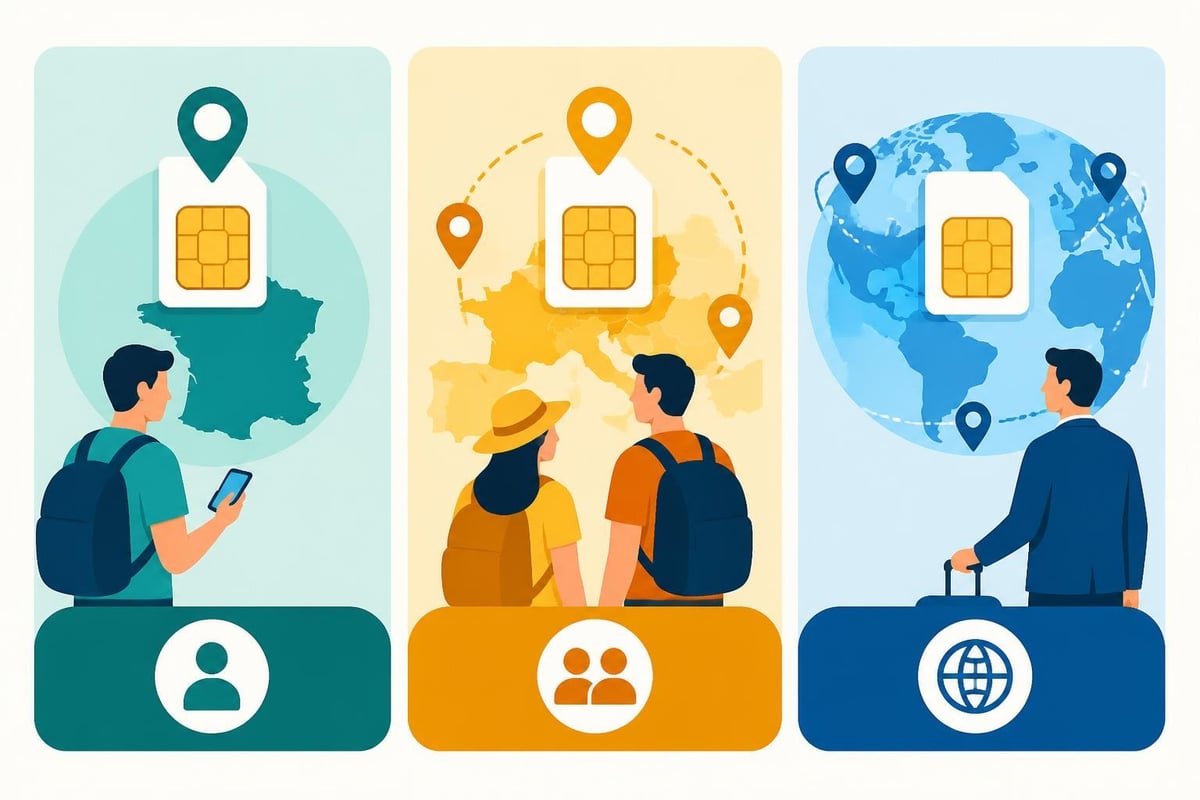
Travelers can choose from three primary categories of eSIM plans, each designed for different travel patterns:
- Single-country plans provide coverage in one specific destination with competitive data allowances
- Regional plans cover multiple countries within a geographic area like Europe, Asia, or the Middle East
- Global plans offer worldwide connectivity across 100+ countries with unified pricing
Each plan type comes with varying data allowances, validity periods, and pricing structures. Single-country plans typically offer the best value per gigabyte when staying in one location, while regional and global plans provide convenience for multi-destination trips.
Comparing Data Allowances and Validity Periods
Data allowance represents one of the most important factors when selecting eSIM plans. Different travelers have vastly different connectivity needs based on how they use their devices abroad.
| Traveler Type | Typical Daily Usage | Recommended Data | Validity Period |
|---|---|---|---|
| Light users (maps, messaging) | 100-300 MB/day | 1-3 GB | 7-15 days |
| Moderate users (social media, browsing) | 500-800 MB/day | 5-10 GB | 15-30 days |
| Heavy users (video, streaming) | 1-3 GB/day | 15-50 GB | 30 days |
| Digital nomads | 3-5 GB/day | Unlimited or 50+ GB | 30-90 days |
Validity periods vary significantly among providers. Some eSIM plans activate when you first connect to a network, while others begin counting down from the purchase date. Understanding this distinction prevents wasted days on your plan.
Calculating Your Data Needs
To accurately estimate your data requirements, consider your typical usage patterns:
- Navigation and maps consume approximately 5-10 MB per hour of active use
- Social media browsing uses 50-150 MB per hour depending on video content
- Video calls require 300-500 MB per hour on standard quality
- Streaming music consumes 40-150 MB per hour based on quality settings
- Email and messaging use minimal data, typically under 10 MB per day
Most travelers overestimate their data needs. Connecting to WiFi at hotels, restaurants, and cafes significantly reduces mobile data consumption.
Regional Coverage and Network Partnerships
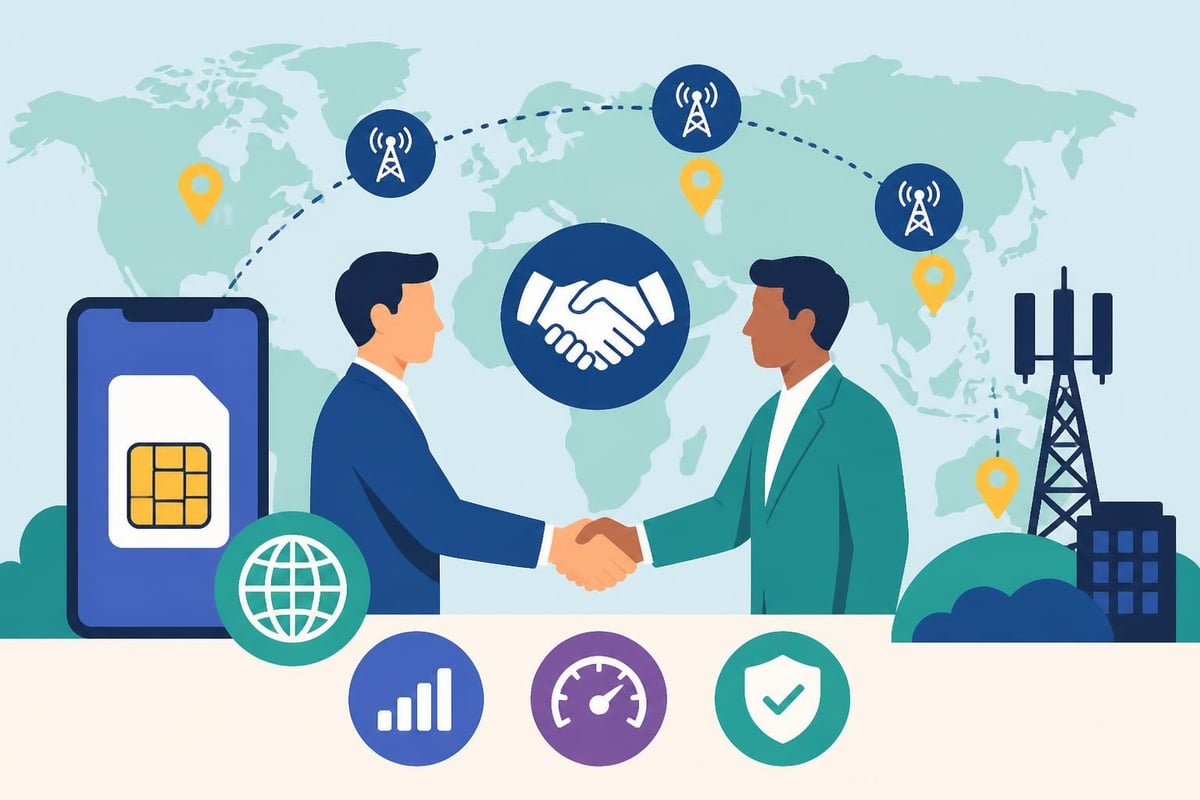
The quality of your connectivity depends heavily on which local networks your eSIM provider partners with in each country. Premium eSIM plans typically connect to Tier 1 carriers offering the fastest speeds and most comprehensive coverage.
When evaluating regional eSIM plans, verify the specific countries included. Some "European" plans exclude popular destinations like the United Kingdom, Switzerland, or Turkey, requiring separate coverage. Similarly, "Asia-Pacific" plans may not include all Southeast Asian countries.
Speed Considerations and Network Priority
Not all eSIM plans offer equal network performance. Understanding the difference between network types helps set realistic expectations:
- 5G-enabled plans provide the fastest speeds where 5G networks exist
- 4G/LTE plans offer reliable connectivity in most urban and suburban areas
- Throttled plans may reduce speeds after reaching certain data thresholds
- Priority vs. deprioritized data affects performance during network congestion
Recent evaluations of eSIM providers highlight significant performance differences between services, with some offering consistent high-speed connectivity while others provide more variable experiences.
Pricing Models and Cost Comparison
eSIM plans use various pricing structures that significantly impact overall value. Understanding these models helps identify the most economical option for your specific travel scenario.
Pay-per-gigabyte pricing charges a fixed rate for each gigabyte of data, typically ranging from $3 to $15 per GB depending on the destination and provider. This model works well for travelers who can accurately predict their data consumption.
Flat-rate packages offer predetermined data allowances for set prices, such as 5 GB for $25 or 20 GB for $60. These packages often provide better value than pay-per-GB when using substantial data.
Unlimited plans charge a daily rate for unrestricted data, though many implement fair usage policies that throttle speeds after 1-5 GB of daily consumption. Daily rates typically range from $5 to $15 depending on the country.
Hidden Costs and Restrictions
Transparent pricing extends beyond the advertised rate. Consider these additional factors:
- Activation fees that some providers charge as one-time costs
- Top-up rates if you exceed your initial data allowance
- SMS and voice call charges, as most travel eSIM plans are data-only
- Tethering restrictions that prevent mobile hotspot usage
- Validity extensions and their associated costs
Comparing total costs across providers requires calculating the complete expense for your entire trip duration, not just the per-gigabyte rate.
Activation Process and Technical Requirements
Successfully using eSIM plans requires compatible devices and understanding the activation sequence. Not all smartphones support eSIM technology, though most devices manufactured after 2020 include this capability.
Device compatibility represents the first consideration. iPhone XS and newer models support eSIM, as do most recent Samsung Galaxy, Google Pixel, and other flagship Android devices. The Apple Developer Documentation provides technical specifications for iOS eSIM implementation.
Step-by-Step Activation Guide
Activating an eSIM plan follows a straightforward process:
- Purchase your plan from your chosen provider and receive the QR code via email
- Verify your device is unlocked and not restricted to a specific carrier
- Navigate to cellular settings on your device (Settings > Cellular > Add Cellular Plan on iOS)
- Scan the QR code using your device camera when prompted
- Label your plan to distinguish it from your primary SIM if using dual SIM functionality
- Enable data roaming for the eSIM profile in your settings
- Test connectivity by turning off WiFi and attempting to browse
Most activations complete within 5-10 minutes. Some providers support app-based activation as an alternative to QR code scanning, which can simplify the process for less technical travelers.
Managing Multiple eSIM Profiles
Modern smartphones support storing multiple eSIM profiles simultaneously, though typically only one or two can remain active at any time. This capability proves valuable for frequent travelers who visit the same destinations regularly.
| Feature | iPhone (iOS) | Android (Varies) |
|---|---|---|
| Stored profiles | Up to 8-10 | 5-7 (device dependent) |
| Active profiles | 2 simultaneously | 1-2 (device dependent) |
| Profile switching | Instant via settings | Instant via settings |
| Primary SIM support | Physical + eSIM | Physical + eSIM |
Switching between stored profiles takes seconds, allowing you to reactivate previous eSIM plans when returning to familiar destinations without purchasing new plans. This feature particularly benefits business travelers with regular routes.
Dual SIM Strategies for Travelers
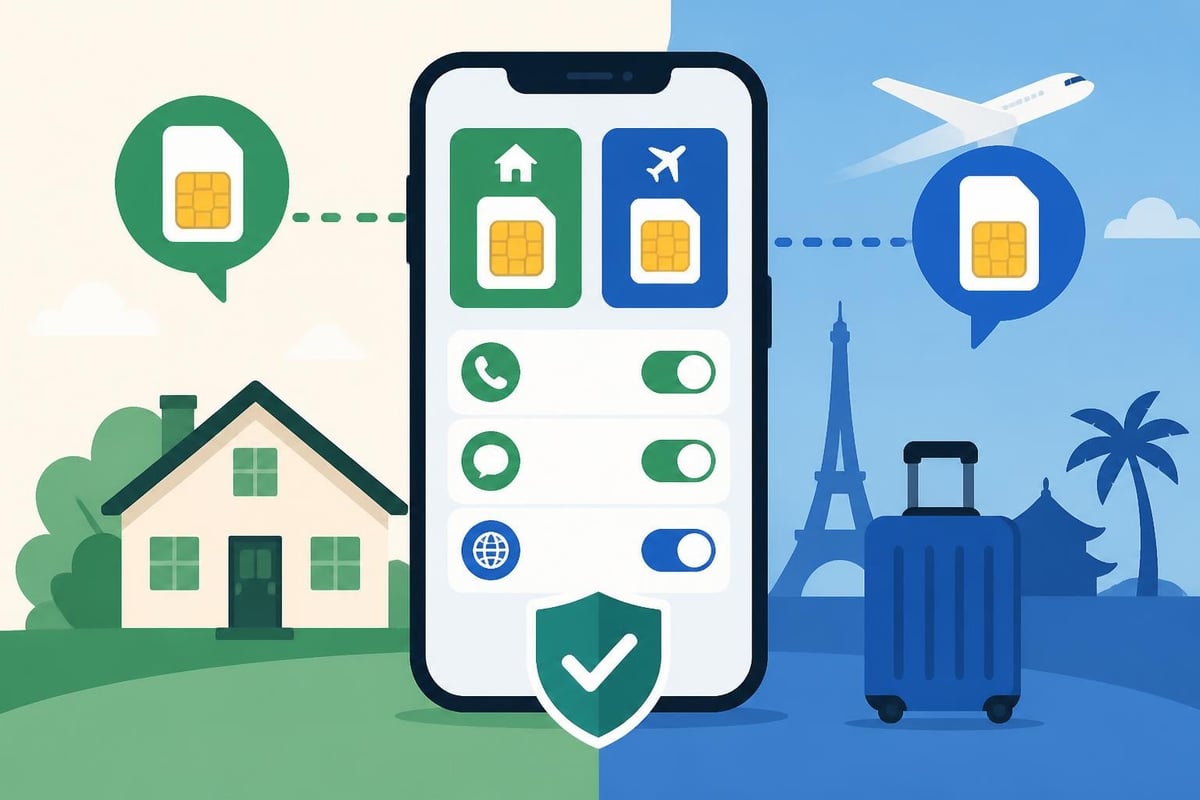
Using your home SIM alongside a travel eSIM requires strategic configuration to avoid unexpected charges:
- Set the eSIM as your primary data line while traveling
- Configure your home SIM for calls and SMS only
- Disable data roaming on your primary SIM
- Use WiFi calling on your home number when available
- Forward important calls to messaging apps if needed
This dual-SIM approach maintains access to your primary phone number for important communications while using affordable local data through your eSIM plan.
Specialized Plans for Different Traveler Types
Different travel purposes require different connectivity solutions. eSIM providers have developed specialized plans targeting specific traveler segments.
Business travelers benefit from plans emphasizing reliability and consistent speeds over cost savings. Features like guaranteed 4G/5G connectivity, priority network access, and 24/7 customer support justify premium pricing for professionals who cannot afford connectivity disruptions.
Digital nomads require high data allowances with extended validity periods. Plans offering 50+ GB valid for 30-90 days with tethering support enable remote work from any location. Some providers now offer subscription models with monthly renewal at discounted rates.
Cruise travelers need plans specifically designed for port stops, as maritime cellular coverage differs from land-based networks. Regional plans covering multiple countries along common cruise routes provide better value than purchasing separate plans for each port.
Event attendees visiting destinations for festivals, conferences, or sporting events can benefit from short-term high-capacity plans. For travelers heading to major events across North America, convenient options like prepaid travel eSIM plans offer quick activation and reliable connectivity without the complexity of multiple carriers.
Security and Privacy Considerations
eSIM plans involve transmitting personal data and network credentials, making security an essential consideration. Reputable providers implement encryption standards that protect your information during activation and use.
Best Practices for Secure eSIM Usage
Protecting your connectivity and personal information requires following established security protocols:
- Purchase only from established providers with transparent privacy policies
- Verify QR codes arrive from legitimate email addresses before scanning
- Use secure WiFi or cellular data when activating eSIM profiles
- Monitor your account for unauthorized data usage
- Remove eSIM profiles when plans expire to prevent accidental reactivation
- Enable device security features like PIN codes and biometric authentication
Public WiFi networks present particular risks during eSIM activation. Using your current cellular connection or waiting for secure WiFi ensures your network credentials remain protected during the provisioning process.
Troubleshooting Common eSIM Issues
Even with straightforward technology, travelers occasionally encounter connectivity challenges with their eSIM plans. Understanding common issues and solutions minimizes disruption to your travel experience.
"No Service" or "SIM Not Provisioned" errors typically indicate activation issues. Solutions include:
- Restarting your device after installing the eSIM profile
- Verifying data roaming is enabled for the eSIM line
- Manually selecting the network operator in cellular settings
- Confirming your plan has activated based on the start date
- Removing and reinstalling the eSIM profile if other solutions fail
Slow speeds or intermittent connectivity may result from network congestion, being connected to a lower-priority network tier, or exceeding fair usage limits on unlimited plans. Toggling airplane mode on and off can force your device to reconnect to a stronger tower.
Inability to receive SMS or calls is expected with data-only eSIM plans. Many travelers mistakenly assume these plans include voice services. Using messaging apps like WhatsApp, Telegram, or iMessage over data provides communication alternatives.
Future Developments in eSIM Technology
The eSIM landscape continues evolving rapidly with new capabilities and applications emerging throughout 2026. Understanding these trends helps travelers anticipate future connectivity options.
IoT integration expands eSIM usage beyond phones to connected devices like smartwatches, tablets, and laptops. Academic research on eSIM in IoT architecture demonstrates how this technology enables seamless connectivity across multiple devices with unified plan management.
AI-powered plan selection uses machine learning to analyze your usage patterns and recommend optimal plans for upcoming trips. Some providers now offer dynamic plans that automatically adjust data allocation based on real-time consumption.
Blockchain-based identity verification may revolutionize eSIM activation security. Research into trusted identities using eSIM infrastructure proposes leveraging telecom-grade systems as authentication foundations for digital services.
Subscription bundling with travel services creates comprehensive packages combining eSIM connectivity with travel insurance, accommodation bookings, and activity reservations at discounted rates.
Regulatory Landscape and Consumer Protection
Different countries impose varying regulations on eSIM providers, affecting plan availability and consumer protections. The United States, European Union, and United Kingdom have established frameworks ensuring fair practices and transparent pricing.
Consumer rights when purchasing eSIM plans typically include:
- Clear disclosure of data allowances, validity periods, and coverage areas
- Refund policies for unused or non-functional plans within specified timeframes
- Access to customer support for technical assistance
- Transparent additional charges for services beyond base data allowances
- Privacy protections governing personal information collection and usage
Purchasing from providers operating under established regulatory frameworks offers greater protection than unregulated alternatives. Verified reviews and third-party evaluations provide insights into provider reliability and customer service quality.
Making the Final Decision
Selecting the optimal eSIM plan requires balancing multiple factors specific to your travel circumstances. Creating a decision framework helps navigate the numerous options available.
Priority ranking clarifies which factors matter most for your situation:
- Coverage area ensures connectivity in your specific destinations
- Data allowance matches your usage patterns and trip duration
- Price fits within your travel budget
- Network quality meets your speed and reliability requirements
- Support availability provides assistance if problems arise
Testing providers on shorter trips before committing to longer-term plans reduces risk. Many travelers purchase small data packages for initial trips, then switch to larger plans from proven providers for extended journeys.
Comparison tools from sources like comprehensive US eSIM plan comparisons aggregate options across multiple providers, enabling side-by-side evaluation of features and pricing.
Choosing the right eSIM plan transforms your travel experience by ensuring reliable connectivity without the complexity of traditional roaming or local SIM cards. By understanding the different plan types, coverage options, and pricing models available in 2026, you can select solutions that match your specific travel needs and budget. Whether you're planning a weekend getaway or an extended international journey, HalaGo offers flexible eSIM plans with instant QR code activation, competitive pricing, and comprehensive coverage to keep you connected wherever your travels take you.